Monday, December 2, 2019

Rising Importance of Point-of-Care Diagnostics Market in Future


With the growing need for early disease diagnosis and improved patient outcomes, in-vitro diagnostics is shifting from centralized laboratories to decentralized point-of-care (POC) testing. POC testing is gaining traction as it enables rapid detection of analytes near to the patient, which facilitat

https://www.linkedin.com/pulse/rising-importance-point-of-care-diagnostics-market-future-akshada-p/?published=t

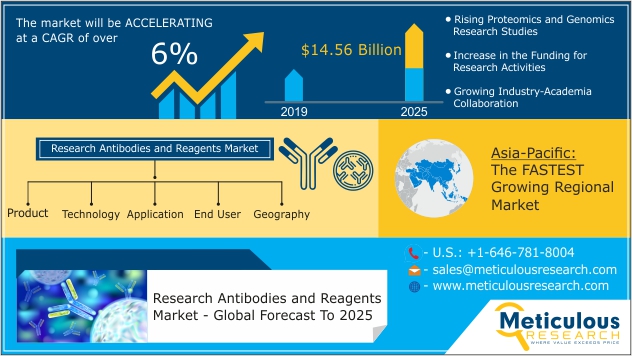
Research Antibodies and Reagents Market Continuous Excellent Growth


Proteomics refers to the study of proteome to identify types of proteins, protein-protein & protein-nucleic acid interactions along with the post-translational modifications. It helps researchers to screen large number of proteins with clinically distinct properties to discover biomarkers, validate

https://www.linkedin.com/pulse/research-antibodies-reagents-market-continuous-growth-amol-phadatare/

Sunday, December 1, 2019

Artificial Intelligence (AI) in Supply Chain Market - Global Opportunity Analysis and Industry Forecast (2019-2027)


The global artificial intelligence in supply chain market is expected to grow at a CAGR of 39.4% from 2019 to reach $21.8 billion by 2027; wherein, Asia-Pacific region is expected to register fastest CAGR throughout the forecast period. In modern digital society, digital co-creation and artificial intelligence in supply chain are becoming a dynamic business norm. The adoption of artificial intelligence in supply chain is routing a new era or technological transformation, allowing the companies to track their operations, augment business strategies, enhance supply chain management productivity, and engage with customers in the digital world. The growth of the global AI in supply chain market is primarily driven by perpetually growing internet users & smart devices across the globe, increasing awareness about artificial intelligence & big data & analytics, government initiatives towards digitization, and adoption of computer vision technology across several vertical industries. However,

https://www.meticulousresearch.com/product/artificial-intelligence-ai-in-supply-chain-market-5064/

What are the recent developments in the global microbial control chemical market?


Nowadays, microbial control chemicals are widely accepted in various industries such as water treatment, preservation & protection, health & hygiene, personal care, food & beverages, wood preservation, and oil & gas among others. These acceptances are attributed to the rising regulations in the food

https://www.linkedin.com/pulse/what-recent-developments-global-microbial-control-market-phadatare/?trackingId=zNI%2Bm6lLSaidPYpj45STpQ%3D%3D

Tuesday, November 5, 2019

Pulse Lavage Market Will Reach USD 327.8 Million by 2024: Meticulous Research®

The growth of global pulse lavage market is driven by rapidly increasing geriatric population, growing volume of orthopedic procedures, rise in sports and road accident-related injuries, and technological advancements in development of surgical tools.
The global market for pulse lavage systems is expected to grow at a CAGR of 8.0% from 2018 to 2024 to reach $327.8 million by 2024.
The global pulse lavage market study presents historical market data in terms of values (2016 and 2017), estimated current data (2018), and forecasts for 2024-by product (pulse lavage devices, components and accessories), usability (disposable pulse lavage systems, reusable pulse lavage systems, and semi-disposable pulse lavage systems), power source (battery-powered, ac-powered, gas-powered), application (orthopedic, wound care, trauma), end user (hospitals& clinics, long-term care facilities, and others), and geography. The study also evaluates industry competitors and analyzes the market at regional and country level.
 pulse lavage systems


Browse in-depth Report on:https://www.meticulousresearch.com/product/pulse-lavage-systems-market/ 

On the basis of product, pulse lavage devices commanded the largest share of global pulse lavage systems market in 2017. Also, pulse lavage devices are expected to witness a rapid growth during the forecast period mainly due to increasing aging population coupled with chronic illnesses such as orthopedic disorders, and growing number of acute and chronic wounds.
On the basis of usability, the disposable pulse lavage systems commanded the largest share of the global pulse lavage market in 2017 and are expected to witness a rapid growth during the forecast period. The large share is mainly attributed to the facts such as- very low chances of cross-contamination and hospital acquired infections due to their sterile nature; and no need of maintenance.
On the basis of type of power source, battery-powered pulse lavage systems commanded the largest share of the global pulse lavage systems market in 2017 and are expected to grow fastest compared to its rival product segments. This is due to the fact that battery powered devices have high demand from end users owing to their low maintenance cost and high energy storage capabilities.
On the basis of application, orthopedics segment commanded the largest share of the global pulse lavage systems market in 2017. Also, orthopedic pulse lavage market is expected to witness a rapid growth during the forecast period mainly due to growing aging population, prevalence of bone disorders, and increase in obese population.
On the basis of end-user, hospitals commanded the largest share of the global pulse lavage systems market in 2017. This is attributed to large volume of patient admissions in hospitals for wound care and surgical procedures.
This research report analyzes major geographies and provides comprehensive analysis of North America (U.S., Canada), Europe Germany, France, U.K.  Italy, Spain, and RoE), Asia-Pacific (Japan, China, India, and RoAPAC), Latin America, and Middle East & Africa. North America commanded the largest share of the global pulse lavage systems market in 2017, followed by Europe, Asia-Pacific, Latin America, and Middle East & Africa. The large share of this region is mainly attributed to the factors such as high volume of orthopedic procedures, growing aging population and prevalence of bone disorders, and relatively greater access to healthcare. However, Asia-Pacific will be the fastest growing regional market due to accelerated economic growth of many countries in this region, growing government focus on healthcare sector, and rising aging population and thereby the prevalence of chronic diseases. In addition, government initiatives towards the development of healthcare facilities and increasing number of hospitals are the key factors propelling the growth of the Asia-Pacific pulse lavage market.
Major players operating in the global pulse lavage market are Stryker Corporation, Zimmer Biomet Holdings, Inc., Smith & Nephew plc, MicroAire Surgical Instruments, LLC, Mölnlycke Health Care AB, C. R. Bard, Inc., Heraeus Holding GmbH, Judd Medical Limited, Corin Orthopaedics Holding Ltd, De Soutter Medical Limited, and Atlantic Surgical Ltd.
Key questions answered in the report-
  • Which are the high growth market segments in terms of product, usability, power source, application, end user, and region/countries?
  • What was the historical market for pulse lavage across the globe?
  • What are the market forecasts and estimates for the period 2018-2024?
  • What are the major drivers, restraints, challenges, and opportunities in the global pulse lavage market?
  • Who are the major players in the global pulse lavage market?
  • How is the competitive landscape and who are the market leaders in the global pulse lavage market?
  • What are the recent developments in the global pulse lavage market?
  • What are the different strategies adopted by the major players in the global pulse lavage market?
  • What are the geographical trends and high growth regions/ countries?
  • Who are the local emerging players in the global pulse lavage market and how do they compete with the global players?
Contact Us:
Meticulous Research®
Email- sales@meticulousresearch.com
Contact Sales- +1-646-781-8004
Connect with us on LinkedIn- https://www.linkedin.com/company/meticulous-research

Monday, November 4, 2019

In Vitro Toxicology/Toxicity Testing Market Worth USD 14.4 Billion by 2025 - Exclusive Report by Meticulous Research®

Meticulous Research® – a leading global market research company published a research report titled “In-Vitro Toxicology/Toxicity Testing Market by Product& Service, Technology (Cell Culture, OMICS), Method (Cell-based Assays, In-Silico), End-point (ADME, Genotoxicity, Organ Toxicity, Dermal Toxicity), End-user, and Geography – Global Forecast to 2025”.
According to this latest publication from Meticulous Research®, the global in-vitro toxicology testing market is expected to grow at a CAGR of 9% from 2019 to reach $14.4 billion by 2025. The growth of this market is driven by factors, such as ethical issues and pressure from animal activists’ groups concerning the use of animals for testing, ban on animal testing on cosmetic products, support from regulatory bodies regarding the approval of in-vitro tests, low costs associated with in-vitro toxicology testing, and advancements in in-vitro methodologies. Moreover, synergetic relationships between various stakeholders in the industry and increasing toxicology databases to facilitate the use of in-vitro test methods are expected to offer significant growth opportunities for the players operating in this market.
The global in-vitro toxicology testing market study presents historical market data in terms of value (2018), estimated current data (2019), and forecasts for 2025-by product & service (equipment, assay kits, consumables, software, services), technology (cell culture technologies, high-throughput screening technologies, OMICS technologies), method (cell-based assays, biochemical assays, in-silico, ex-vivo), end-point (ADME; skin irritation, corrosion, sensitization; genotoxicity; cytotoxicity; ocular toxicity; organ toxicity; phototoxicity; and dermal toxicity), end-user (pharmaceutical & biotechnology industries, cosmetics industry, food industry, and chemical industry). The study also evaluates industry competitors and analyzes the market at a regional and country level.
in-vitro toxicology testing market

On the basis of product, the consumables segment is estimated to dominate the overall in-vitro toxicology testing market in 2019, mainly due to increasing number of in-vitro tests being performed across the globe leading to recurrent purchase of reagents and other labware. However, the software segment is projected to grow at the highest CAGR during the forecast period. The high growth of this segment can be attributed to increasing computer models and algorithms being developed to predict toxicity of test substances.
On the basis of technology, the cell culture technologies segment is estimated to account for the largest share of the in-vitro toxicology testing market in 2019, owing to growing adoption of 3D cell culture and stem cell models for toxicity testing.
On the basis of method, the in-vitro toxicology testing market is sub-segmented into cell-based assays, biochemical assays, in silico testing, and ex vivo testing. Cell-based assays segment is estimated to command the largest share of the in-vitro toxicology testing market in 2019. Advancements in cell-based technologies such as high-content screening and label-free detection are the key factors attributed to the large share of this segment in the overall market.
On the basis of end point, the ADME segment is estimated to account for the largest share of the overall in-vitro toxicology testing market in 2019. This is primarily attributed to the increasing number of early stage in-vitro ADME screening tests to prevent failure at later stage.
On the basis of end user, the in vitro toxicology testing market is segmented into pharmaceutical and biotechnology companies, cosmetics, food industry, and chemical industry. The pharmaceutical and biotechnology companies segment is estimated to account for the largest share of the overall in-vitro toxicology testing market in 2019. This is primarily attributed to increasing drug attrition rates and growing adoption of early in-vitro preclinical safety testing to filter out molecules with a higher potential for toxicity. However, the cosmetics industry segment is expected to grow at a higher rate owing to the ban on use of animals for testing toxicity of cosmetics and its ingredients.
This research report analyzes major geographies and provides comprehensive analysis of Europe (Germany, U.K., France, Italy, Spain, and RoE), North America (U.S., Canada), Asia-Pacific (China, Japan, India,and RoAPAC), Latin America, and Middle East & Africa. Europe commanded the largest share of the global in-vitro toxicology testing market, followed by North America and Asia Pacific (APAC). The large share of this region is mainly attributed to the factors such as ban on animal testing for cosmetics and its ingredients, and government initiatives to promote the reduction of use of animals for toxicity testing. Asia-Pacific region is expected to grow at the highest CAGR during the forecast period of 2019 to 2025, owing to increasing biotech investments in this region and growing collaborations between local and foreign companies.
In-vitro toxicology testing market is a highly consolidated in nature, wherein 3 major players — Thermo Fisher Scientific (US), Merck (Germany), and GE Healthcare (US) — accounted for major share of the global in-vitro toxicity testing market. Other key players operating in this market are Bio-Rad Laboratories (US), SGS SA (Switzerland), Laboratory Corporation of America Holdings (U.S.), Qiagen N.V. (Netherlands), and Eurofins Scientific (Luxembourg), among others.
Key questions answered in the report-
  • Which are the high growth market segments in terms of product & service, technology, method, end-point, end-user, and region/countries?
  • What was the historical market size for in vitro toxicology testing across the globe?
  • What are the market forecasts and estimates for the period 2019-2025?
  • What are the major drivers, restraints, opportunities, and challenges in the global in vitro toxicology testing market?
  • Who are the major players in the global in vitro toxicology testing market?
  • How is the competitive landscape and who are the market leaders in the global in vitro toxicology testing market?
  • What are the recent developments in the global in vitro toxicology testing market?
  • What are the different strategies adopted by the major players in the global in vitro toxicology testing market?
  • What are the geographical trends and high growth regions/ countries?
  • Who are the local emerging players in the global in vitro toxicology testing market and how do they compete with the global players?
Contact Us:
Meticulous Research®
Contact Sales- +1-646-781-8004

Thursday, October 24, 2019

Sequencing by Synthesis to register the fastest growth in the next-generation sequencing market by 2025|Meticulous Research®

Meticulous Research®– leading global market research company published a research report titled “Next Generation Sequencing Market by Type (Consumables, NGS Platform, Software), Sequencing Type (Whole Genome, Targeted), Technology (Sequencing by Synthesis, Sequencing by Ligation), Application (Clinical, Research), End User – Global Forecasts to 2025”.
According to this latest publication from Meticulous Research®, the global next-generation sequencing market is expected to grow at a CAGR of 16.2% from 2019 to reach $10.35 billion by 2025. The growth in the next-generation sequencing market is mainly attributed to technological advancements in sequencing procedures, surge in genome mapping programs, and increase in drug discovery platforms demanding NGS technology. In addition, increasing number of government initiatives for large-scale genomic sequencing projects and emergence of cloud computing as a potential data management service supports the growth of this market. However, lack of skilled professionals, specifically in developing countries is expected to restrict the growth of this market to a certain extent.
The global next-generation sequencing market study presents, historical market data in terms of values (2017 and 2018), estimated current data (2019), and forecasts for 2025-by product type (consumables, NGS platforms/instruments, software, services), sequencing type (Whole Genome Sequencing (WGS), Whole Exome Sequencing (WES), targeted sequencing), technology (Sequencing by Synthesis (SBS), Ion-Semiconductor Sequencing, Single Molecule Real Time (SMRT), Sequencing by Ligation (SBL), Nanopore), application (clinical, research), end user (clinical diagnostic laboratories, pharma & biotech, academic & research institutes), and geography. The study also evaluates industry competitors and analyzes their market share at the global and regional level.

Based on product type, the consumables segment accounted for the largest share of the overall next-generation sequencing market in 2019 and is slated to grow fastest during the forecast period. The large share of this segment is mainly attributed to increasing number of sequencing procedures done in diagnostic laboratories and recurrent use of consumables in sequencing procedures.
Based on sequencing type, targeted sequencing segment is expected to account for the largest share of the overall next-generation sequencing market in 2019. The large share of this segment is mainly attributed to higher sensitivity of the technique to call variants, low sequencing costs as compared to other sequencing technologies, and ability to generate manageable data volumes with reliable results. On the other hand, whole genome sequencing segment is slated to grow at the fastest CAGR during the forecast period, due to growing investments in whole genome sequencing projects by governments to study population genetics and increasing research activities to develop personalized medicines.
Based on technology, sequencing by synthesis (SBS) segment is expected to account for the largest share of the overall next-generation sequencing market in 2019. This is also the fastest growing market segment during the forecast period. The large share of this segment is mainly attributed to high accuracy in DNA sequencing, highest yield of error free throughput, and growing incorporation of this technology in NGS instrumentation.
To get detailed industry insights and market size: Download market research report avail now, our latest offering @​ https://www.meticulousresearch.com/download-sample-report/cp_id=5040
Based on application, clinical application segment is expected to account for the largest share of the overall next generation sequencing market in 2019 and is poised to grow at the fastest CAGR during the forecast period. The large share of this segment is mainly attributed to rising incidence of cancer, growing prevalence of genetic disorders in infants, and use of NGS technology in diagnostic procedures to make firm clinical decisions. Clinical applications segment of next-generation sequencing technologies is further segmented into oncology, reproductive health diagnostics, cardiovascular, and other applications.
Based on end user, the clinical diagnostic laboratories segment is expected to account for the largest share of next-generation sequencing market in 2019. This segment is also expected to grow at the fastest CAGR during the forecast period. The growth in this market is primarily attributed to increasing volume of diagnostic procedures performed in clinical diagnostic laboratories, growing adoption of next-generation sequencing products among clinical laboratories, and growing inclination towards genetic analysis in disease diagnosis to provide tailored treatments for patients.
This research report analyzes major geographies and provides comprehensive analysis for North America (U.S., Canada), Europe (Germany, France, U.K., Italy, Spain, and Rest of Europe), Asia-Pacific (China, Japan, India, and RoAPAC), Latin America, and Middle East & Africa. North America accounted for the largest share of the global next-generation sequencing market, followed by Europe and Asia Pacific. However, next-generation sequencing market in Asia-Pacific region is expected to register the fastest CAGR during the forecast period. Growth in this market is expected to be driven by increased investments to enhance accessibility of healthcare services, improved healthcare infrastructure, and continuous growth in drug discovery programs. In addition, government initiatives and investments towards genome sequencing and launch of various research initiatives for the development of personalized treatment are expected to drive the market growth in the Asia Pacific region during the forecast period.
Key Players
The report includes competitive landscape based on extensive assessment of the key strategic developments adopted by leading market participants in the industry over the past 4 years (2016-2019). The key players profiled in the global next-generation sequencing market report are Illumina, Inc. (U.S.), Agilent Technologies, Inc. (U.S.), Bio-Rad Laboratories, Inc. (U.S.), Thermo Fisher Scientific Inc. (U.S.), Qiagen N.V. (Netherlands), PerkinElmer, Inc. (U.S.), F. Hoffmann-La Roche AG (Switzerland), 10X Genomics, Inc. (U.S.), Pacific Biosciences of California, Inc. (U.S.), Oxford Nanopore Technologies Ltd (U.K.), Beckman Coulter, Inc. (U.S.), GenapSys, Inc. (U.S.), New England Biolabs, Inc. (U.S.), PierianDx (U.S.), and BGI Genomics (China).
Key questions answered in the report-
  • Which are the high growth market segments in terms of product type, sequencing type, technology, application, end user, and regions/countries?
  • What was the historical market for NGS across the globe?
  • What are the market forecasts and estimates for the period 2019-2025?
  • What are the major drivers, restraints, challenges, opportunities, and trends in the global NGS market?
  • Who are the major players in the global NGS market?
  • How is the competitive landscape and who are the market leaders in the global NGS market?
  • What are the recent developments in the global NGS market?
  • What are the different strategies adopted by the major players in the global NGS market?
  • What are the geographical trends and high growth regions/ countries?
Contact Us:
Meticulous Research®
Contact Sales- +1-646-781-8004